|
|
|
| Taweret goddess faience necklace |
|
3 hippo / Tawaret /necklace
Turquoise and faience beads
Tawaret
was a goddess who protected women during pregnancy and childbirth. Appearance: head of a hippopotamus with the arms and legs
of a lion, the back and tail of a crocodile, and the breasts and stomach of a pregnant woman.
|
|
39 $ Made to order !
Circa 1-2 week needed to make one.
|
|
|
|
|
| Egyptian-Ankh-earring covered with gold luster |
|
Bronze Ankh earring
Faience Ankh with gold luster
In ancient Egypt the Ankh symbolize the breath of eternal life. General meaning is "life - giving power"
|
|
15 $
Shipping in paper box.
|
|
|
|
|
| Wedjat Eye faience necklace with mummy beads |
|
Udjat eye amulet necklace
Size: 6,5x6,0 cm
Lenght: 54-55 cm
Cobalt blue and turquoise faience
The eye of the God Horus (the Udjat eye: the Egyptian word means; sound,whole,undamaged) was reputed for its great healing
and protective power.
|
|
52 $
Shipping with registered airmail,in black wooden box
Made to order! We need circa 1 week to make one.
|
|
|
|
| Nile green winged scarabeus faience necklace |
|
Winged scarab necklace in green color
Size: 6,5x3,5 cm Length: circa 43 cm
-green faience with gold luster
The personification of the scarab god Khepri, a solar god of resurrection, and so the scarab also came to symbolize new
life and creation.
|
|
|
|
| Square Udjat Eye necklace - turquoise |
|
Horus Eye amulet necklace - Turquoise and
gold color
Size: 4,5x3,5 cm Length: circa 50 cm
Horus, the son of Osiris and Isis, was called 'Horus who rules with two eyes.' His right eye was white representing the sun.
The eye served to ensure safety, protect health, and provide the wearer with wisdom and prosperity; it was called the
'all-seeing Eye.'
|
|
29.50 $ Shipping in black velvet case
Made to order. Circa 1 week.
|
|
|
|
| Little turquoise scarab faience earring |
|
Turquoise faience scarab earring
Most scarabs were made for the living. The small magical object was believed imbued with particualar protective powers that
warded off evil and provided good things for the owner for this life
|
|
15 $
Shipping in paper box.
|
|
|
|
|
| Winged scarabeus beetle with faience tube beads |
|
Painted scarab beetle with mummy tube beads - wall hanging
Size: 9x3 cm
Sacred scarab when worn as a heart scarab or winged scarab to provide a safe journey into the Afterworld of the gods.
Egyptians carried the Scarab amulet to protect their hearts and give them long lives.
|
|
25 $ Shipping in wooden case
The faience tube beads may similar.
|
|
|
|
|
| Egyptian turquoise lotus flower earring |
|
Triangle Lotus earring -
golden and turquoise
Tuquoise with gold colored faience lotus earring Painted on both side
Lotus
Flower is a symbol of the sun, of creation
and rebirth. In the creation myth it was a
giant lotus which first rose out of the watery chaos at the beggining
of time.
From this lotus the sun itself emerged on
the first day.
|
|
16 $
Shipping in paper box.
|
|
|
|
|
| Egyptian faience Bastet goddess necklace in turquoise color |
|
Turquoise faience Bastet, seated
Cat goddess necklace with blue glass beads
Size: 4x2 cm \ length: circa 52 cm
The collar covered with gold luster.
Bastet was the goddess of fire, cats, of the home and pregnant women. According to one myth, she was the personification
of the soul of Isis. She was also called the "Lady of the East". As such, her counterpart as "Lady of the West"
was Sekhmet.
In Egypt all cats were considered property of the Pharaohs.
|
|
22 $
Shipping in paper box.
|
|
|
|
|
| Gold and black Udjat eye - Eye of Ra |
|
Gold - black Horus Eye on bronze chain
Lenght: circa 42cm
Thoth, the God of magic and the moon, used his powers
to reassemble Horus’s eye and returned it to Horus. It was a symbol of the power of the God of light, and therefore
a popular amulet for protection and good luck. On presenting his eye to Osiris, Osiris experienced rebirth.
The Eye of Horus symbolizes protection and the bringing
of wisdom. The eye also symbolizes our ability to see with clarity and truthfulness.
|
|
26 $
Shipping in black velvet case
|
|
|
|
Turquoise Ankh with Was scepter
Size: 12x6 cm
Turquoise faience, with gold decoration - wall Hanging
The ancient gods of Egypt are often depicted as carrying ankh signs. We find many other gods often holding the ankh sign,
along with a scepter and Djed pilar, in various tomb and temple reliefs, placing it in front of the king's face to symbolize
the breath of eternal life.
|
|
32 $ Shipping in black velvet case
Sorry, out of stock !!!
|
|
|
|
Gold headed Horus necklace
Size: 3,5 x 3,5 cm
Turquoise faience with gold lustre
Horus (Egyptian Har or Hor). Egyptian sky god. He was the son of Osiris and Isis. It was a symbol of the power of the
God of light, and therefore a popular amulet for protection.
|
|
| big-egyptian-scarab-necklace-turquoise |
|
|
|
Big Heart Scarab Necklace
Size: 5cm x 3.5cm
The large scarab is often placed over the
heart, sometimes with an inscription on the back side on it - text 30. from the Book of Dead -, and thus known as a Heart
Scarab. They are usually made of faience or stone. The sacred 'sun' scarab, giving light and warmth.
|
|
29 $
Shipping in black velvet case
|
|
|
| Flower of life grey faience pendant |
|
|
| Flower of life pendant |
|
Flower of Life pendant
Size: 4 cm
The oldest known example of Flower of Life is
in the Temple of Osiris at Abydos. Some suggest they are over 6,000 years old, and may date back to as long ago as 10,500
B.C. or earlier. It has been said that the Flower of Life may possibly represent the Eye of Horus.
|
|
12 $
Shipping in black velvet case.
|
|
|
|
|
| Egyptian black faience Ankh necklace |
|
black faience Ankh
Size: 4,5cm x 2.3cm
Meaning: While the origins of the ankh may be obscure,
the meaning is certainly clear - "life". It is with this basic connotation that the sign is carried in the hands of many Egyptian
deities. The ankh may represent the life-giving elements of air and water. It was often shown being offered to the king's
lips as a symbol of the "breath of life."
|
|
16.50 $
Shipping in paper box.
|
|
|
|
|
| Egyptian Royal blue Horus Eye necklace with mummy beads |
|
Royal blue Horus Eye necklace
Size: 4x2.5 cm
It was a symbol of the power of the God of light,
and therefore a popular amulet for protection and good luck.
|
|
29.50 $
made to order. Circa 1 week.
|
|
|
|
|
| Turquoise Thot \ Ibis bird necklace - faience amulet |
|
Turquoise Ibis bird necklace
Size: 3cm x 2.5cm
Faience covered with turquoise glaze.
The Ibis was a sacred bird in Ancient Egypt, most
closely identified with the moon god Thoth, the messanger of the sun god Ra, who is often represented as an ibis-headed man
or as a baboon.
Thoth, was credited as the inventor of astronomy,
writing, and mathematics.
He is related with the moon.
|
|
24 $
Shipping in black velvet case.
|
|
|
|
|
| faience-bracelet-with-scarabs |
|
Faience Braclet with Beads and Scarabs
Dark blue and gold faience beads with 3 scarabs
|
|
|
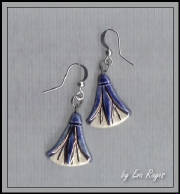
| blue egyptian lotus earring |
|
Faience Earring with Lotus flowers in blue
and white
Lotus Flower is a symbol of the sun, of creation and rebirth. In the creation myth it was a giant lotus which
first rose out of the watery chaos at the beggining of time. From this lotus the sun itself emerged on the first day.
|